- Joseph Ryan Smolarz
- 0 Comments
Managing Investment Risk for Doctors
Managing investment risk as a doctor means making a clear plan that balances growth and safety. Your high income, limited time, and career pressures make...
Doctors get clear about money by building a simple system. This system automates key money choices. It tracks only important numbers. Doctors get expert help...
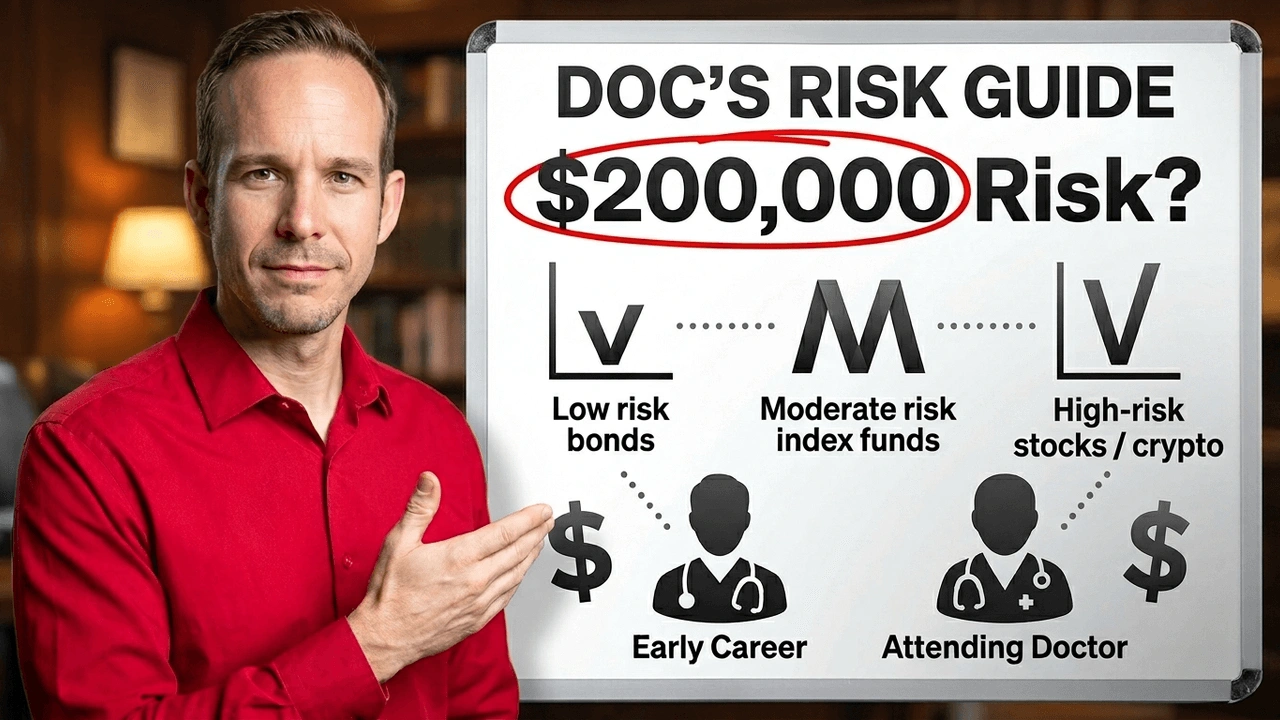
Doctors should choose investment types based on how much risk they can handle, how long they can stay invested, and what financial goals they are...
Passive investing is usually better for busy doctors. It reduces trading and lowers costs. It also improves tax efficiency. Passive investing avoids the time burden...
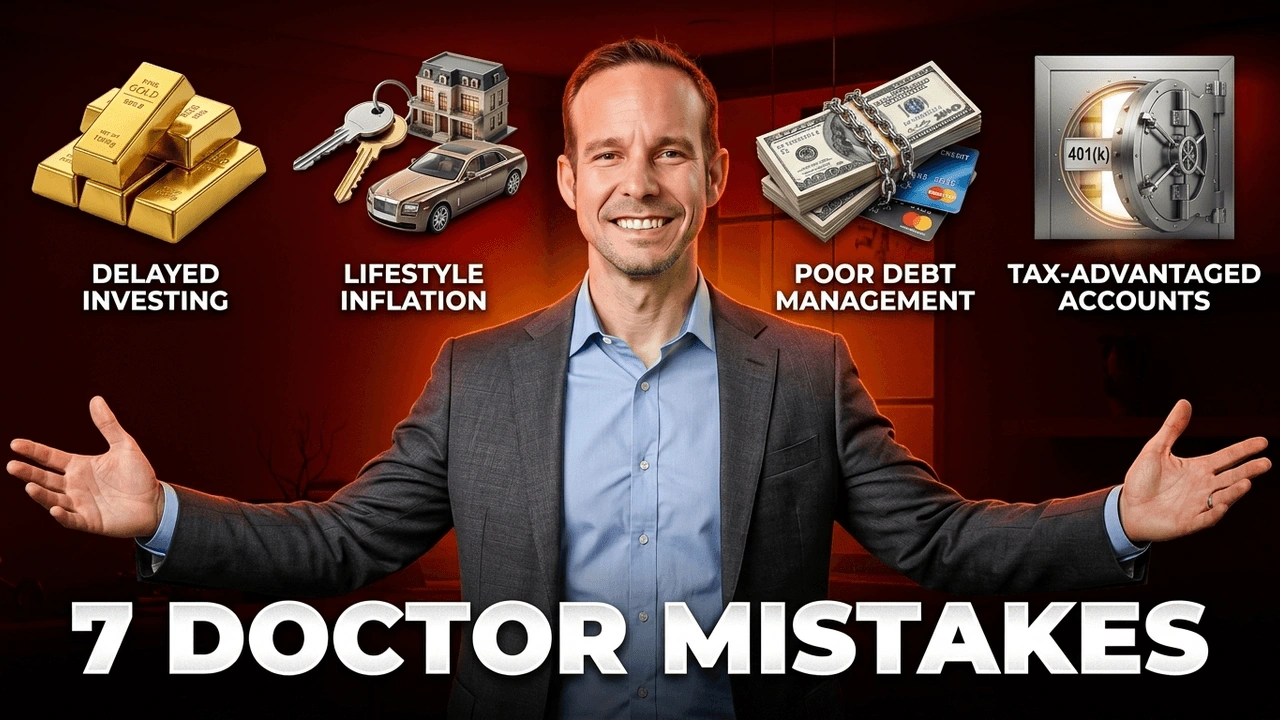
Doctors make bad financial decisions in their 30s and 40s because their income rises faster than their financial education. This causes delayed investing, lifestyle inflation,...
Most doctors retire in their mid to late 60s. The average retirement age is about 65. But retirement ages vary a lot. They depend on...
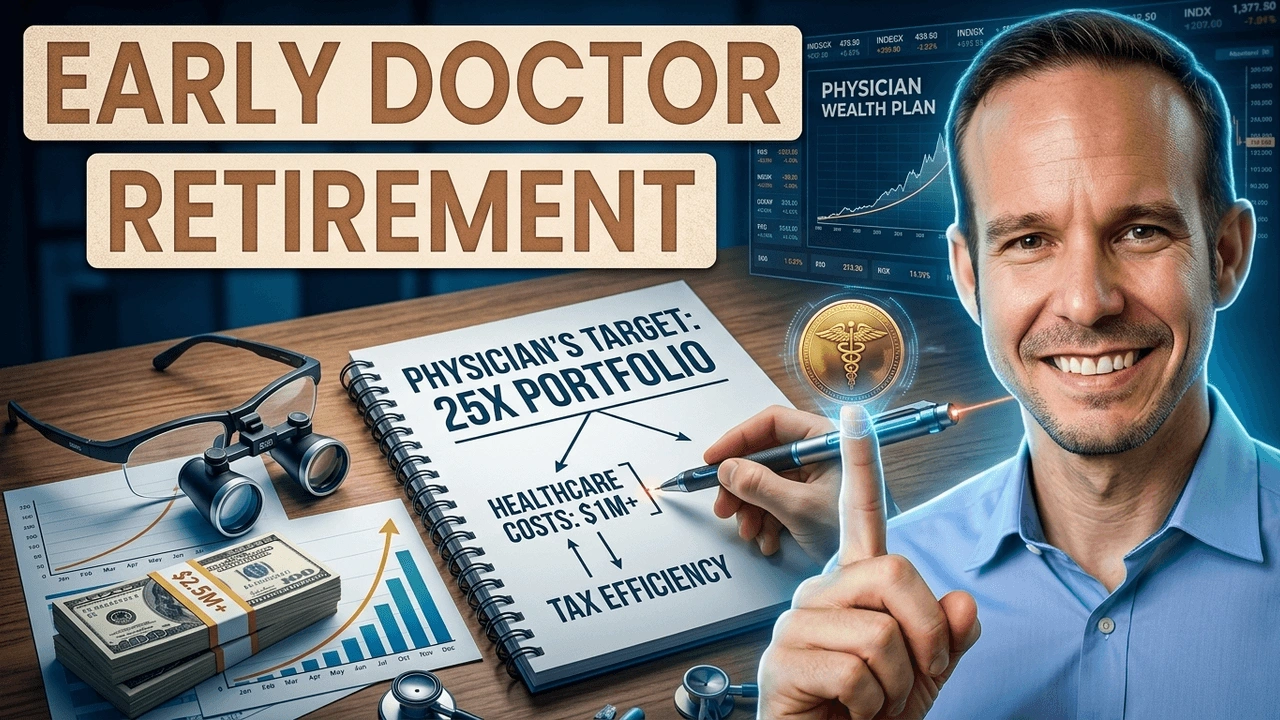
https://youtu.be/AMtdJUQ0dLk Doctors retire early when they turn their high income into long-term investments on purpose. They control how their lifestyle grows. They use tax-efficient accounts....
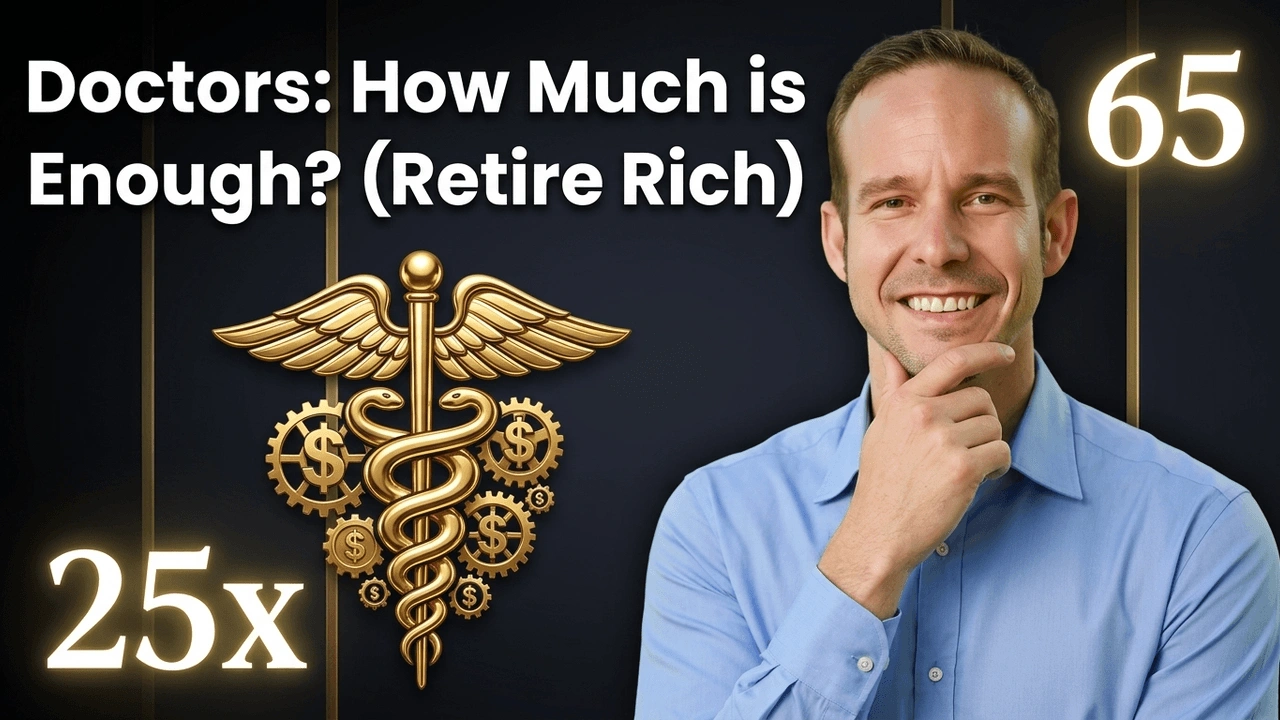
You typically need around 25 times your expected annual retirement expenses saved by age 50, which for many physicians lands in the multi-million-dollar range. The...
Most doctors need a 401k with millions of dollars. This is part of a bigger retirement plan. The total savings depends on lifestyle, retirement age,...
You can retire confidently as a doctor even if you start late. You must align your income, savings, insurance, and tax plans into one coordinated...